Balearics
Spain's tourist rental crackdown: what property managers in Ibiza actually need to do
 Maud NeattMay 20, 20269 min read
Every few months, a Spanish minister announces a new crackdown on holiday rentals. The press releases land hard, the headlines run for a week, and a fortnight later the actual administrative reality has barely shifted. If you manage villas in Ibiza or anywhere else in the Balearics, the gap between rhetoric and enforcement is where you live — and getting it wrong in either direction is costly.
Here's what's actually changed, what's coming, and what your operational response should be.
The regulatory pieces that are now in force
Three things have moved from "announced" to "operational" in the last eighteen months, and these are the ones you need to act on:
The national rental registry. Decreto Real 1312/2024 came into force at the start of 2025 and now sits behind the booking platforms. Airbnb, Booking, Vrbo and the rest are obliged to collect the national registration number for any short-term let and refuse to publish listings without one. The number is separate from the regional tourist licence — it's a unified national identifier issued through the Registro Único de Arrendamientos. If your owners haven't registered, their listings will be quietly suppressed and the platform won't tell you why.
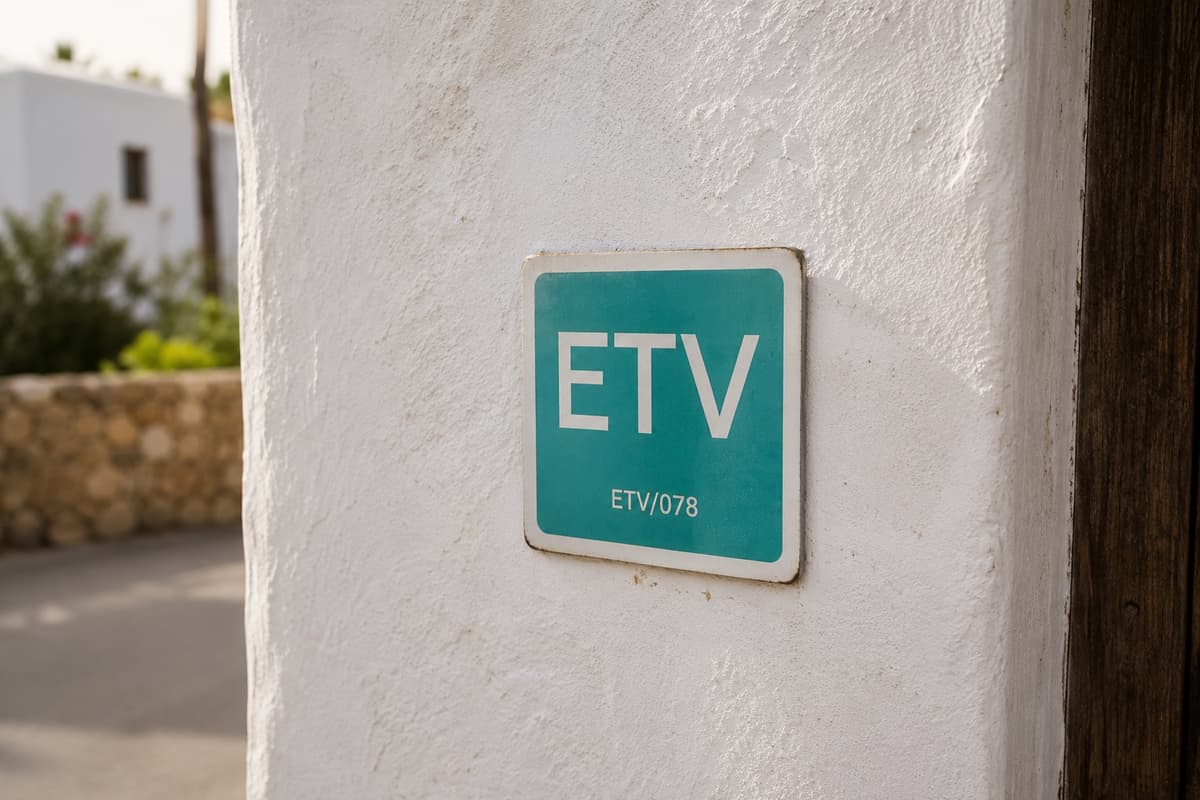
Tighter ETV enforcement in the Balearics. The regional moratorium on new tourist licences in Ibiza and Formentera is now indefinite. Existing licences remain valid, but transfers between properties are essentially impossible, and the Consell d'Eivissa has the inspector headcount to actually check. Fines for unlicensed letting now start at €40,000 and the rooftop drone surveys are real — we've had two owner clients receive opening letters this year purely from aerial pool-cover analysis. (For the renewal and inspection mechanics, see our ETV guide for Ibiza villa owners.)
Guest registration with the Ministerio del Interior. The platform that used to live at the local Guardia Civil station is now centralised through Hospedajes. Every guest's data must be uploaded within twenty-four hours of check-in. The platform itself is functional — the friction is in your front-of-house process, particularly when guests arrive late and your check-in agent is fielding queries on the WhatsApp group rather than running passports through a scanner.
What's announced but not enforceable yet
The Decreto Ley on "tourist saturation zones" is the one currently getting headlines. The framework exists; the actual zone designations don't. The Govern Balear has the legal authority to restrict short-term lets in saturated areas, but the maps haven't been drawn, the consultation periods haven't closed, and any zone designation will face years of judicial review from property owners' associations. Operationally, plan as if it's coming, but don't make business decisions that depend on knowing where the lines will fall.
The same is true of the proposed cap on rental nights per property per year. It's been floated, costed, and walked back twice. If you're advising an owner on whether to renew their licence or sell, this shouldn't tip the decision either way.
Your operational checklist
Stop thinking about this as a compliance project and start treating it as a permanent fixture of how you run the agency.
One spreadsheet, two columns. For every property: ETV number, national registry number, expiry dates, last inspection date, link to the digital file. We've seen too many agencies discover during an inspection that the ETV is in the previous owner's name, or that the registry number was issued against an apartment two doors down. Audit it once a year, properly.
Guest registration runs inside check-in, not after. If your check-in agent isn't entering Hospedajes data while the guest is still in front of them, you have a structural problem. The twenty-four-hour rule sounds generous until you have three Saturday arrivals and the Sunday morning shift forgets to clear the queue. Build it into the script.
Stop accepting bookings on properties without a current ETV. This sounds obvious. It is not. Owners who are mid-renewal, or who have inherited a property with paperwork in limbo, will pressure you to take "just one booking" because the calendar is empty. Don't. The fine is €40,000 and lands on the operator, not the owner. If you're setting up an agency in Ibiza, bake this rule into the property-onboarding checklist.
Know which of your owners are exposed. Make a list. Not for the inspector — for your own renewal conversations. Owners who registered ETVs in 2017 against properties they've since extended, divided, or sold a share of are sitting on paperwork that doesn't match the cadastre. When the inspector comes, the licence is voided. Better to have that conversation now than during a high-season inspection.
The longer arc
The direction of travel is clear: fewer licences, more scrutiny, higher fines, more guest-data obligations. The agencies that will still be operating in five years are the ones that have already accepted this as normal and built it into their cost base.
The ones that won't be operating are the ones still treating compliance as an annoying overhead to minimise. The fines are an existential risk for a small agency. The reputational damage of an owner losing their licence on your watch is worse.
We've heard a lot of complaints about the new rules. Most of them are valid. None of them change what you have to do on Monday morning.
Frequently asked questions
What is the national rental registry and why does it matter?
Decreto Real 1312/2024 came into force at the start of 2025 and now sits behind the booking platforms. Airbnb, Booking, Vrbo and the rest must collect a national registration number for any short-term let and refuse to publish listings without one. This number is separate from the regional tourist licence and is issued through the Registro Unico de Arrendamientos. If your owners are not registered, their listings are quietly suppressed and the platform will not tell you why.
What is the fine for letting a property without a current ETV licence?
Fines for unlicensed letting in the Balearics now start at 40,000 euros, and the fine lands on the operator, not the owner. The regional moratorium on new tourist licences in Ibiza and Formentera is indefinite, existing licences remain valid but transfers between properties are essentially impossible, and the Consell d'Eivissa now has the inspector headcount to check, including rooftop drone surveys.
How quickly does guest data have to be registered with the authorities?
Every guest's data must be uploaded to the Hospedajes platform, now centralised through the Ministerio del Interior, within twenty-four hours of check-in. The platform itself is functional, so the friction tends to be in your front-of-house process rather than the system, especially with late arrivals. The post recommends entering the data inside check-in while the guest is still present, not afterwards.
Are the tourist saturation zones enforceable yet?
No. The Decreto Ley framework on tourist saturation zones exists, but the actual zone designations do not. The Govern Balear has the legal authority to restrict short-term lets in saturated areas, but the maps have not been drawn, consultation periods have not closed, and any designation will face years of judicial review. Plan as if it is coming, but do not make business decisions that depend on knowing where the lines will fall.
Is there a cap on the number of rental nights per property per year?
A cap on rental nights per property per year has been floated, costed, and walked back twice, so it is not in force. When advising an owner on whether to renew their licence or sell, this proposal should not tip the decision either way.